Crawl-space Water Removal in Georgia
Limited clearance makes water beneath a house a different task from water on an open floor. Use known dimensions and an access description; do not enter a wet crawl space to complete a calculator.
Independent referral service. We may receive compensation for qualified referrals. Availability and provider charges vary.
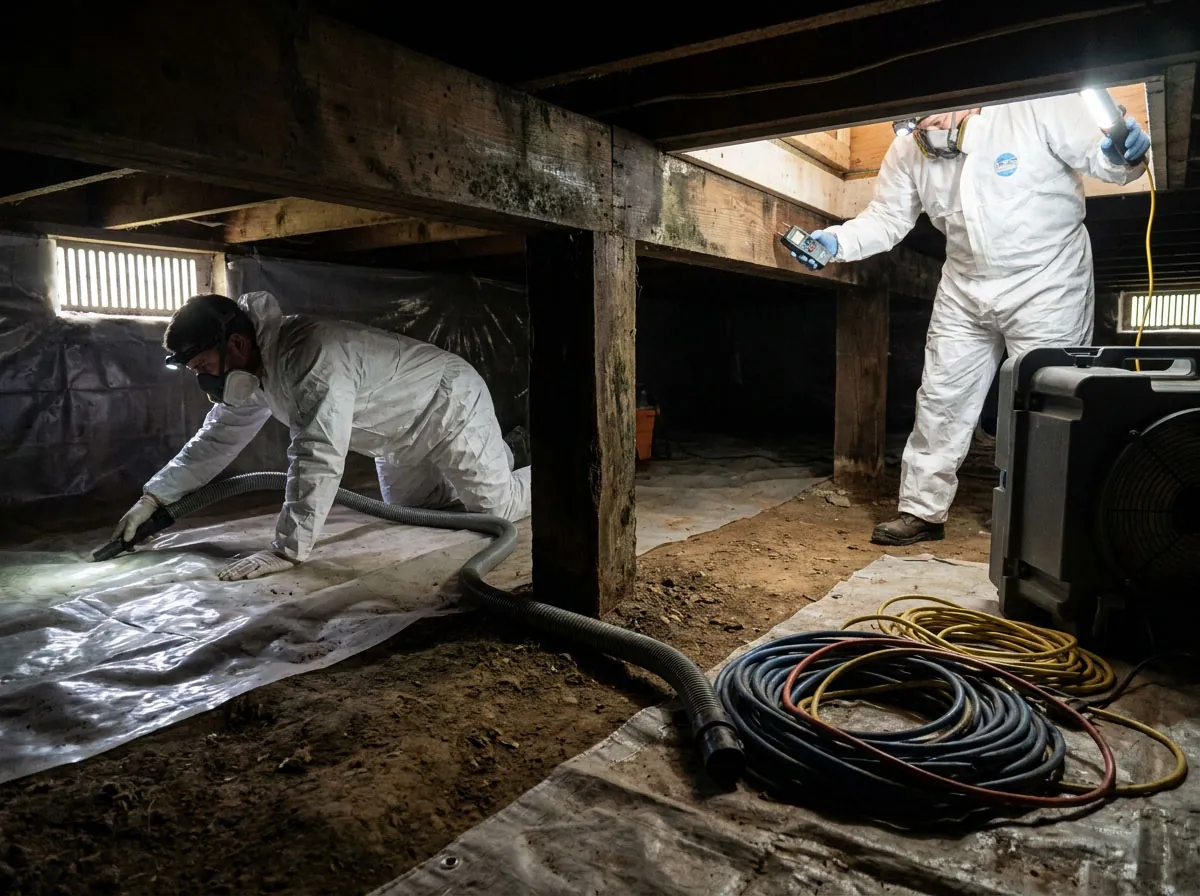
The Work Below the Floor Needs Its Own Access and Material Plan.
A crawl-space allowance based on area covers only the selected cleanup-and-drying scenario. Add insulation or ground-cover replacement using an independently obtained amount. Access is a discussion flag, not a made-up price factor, and permanent drainage or encapsulation remains outside that allowance.
Use What You Already Know About Access
Describe the entrance location, known clearance and standing water visible from a safe position. Do not enter a wet crawl space to take a measurement. Wiring, unstable ground, damaged supports and other concealed hazards need assessment. Ask whether the provider can work with the known access before arranging a visit.
Distinguish Water from Wet Building Materials
Removing pooled water does not answer whether insulation, subfloor, joists or ground cover were affected. Ask for a material-by-material assessment and how inaccessible areas will be checked. Wet insulation and debris removal may be separate from extraction, while replacement should have its own quantities and specifications.
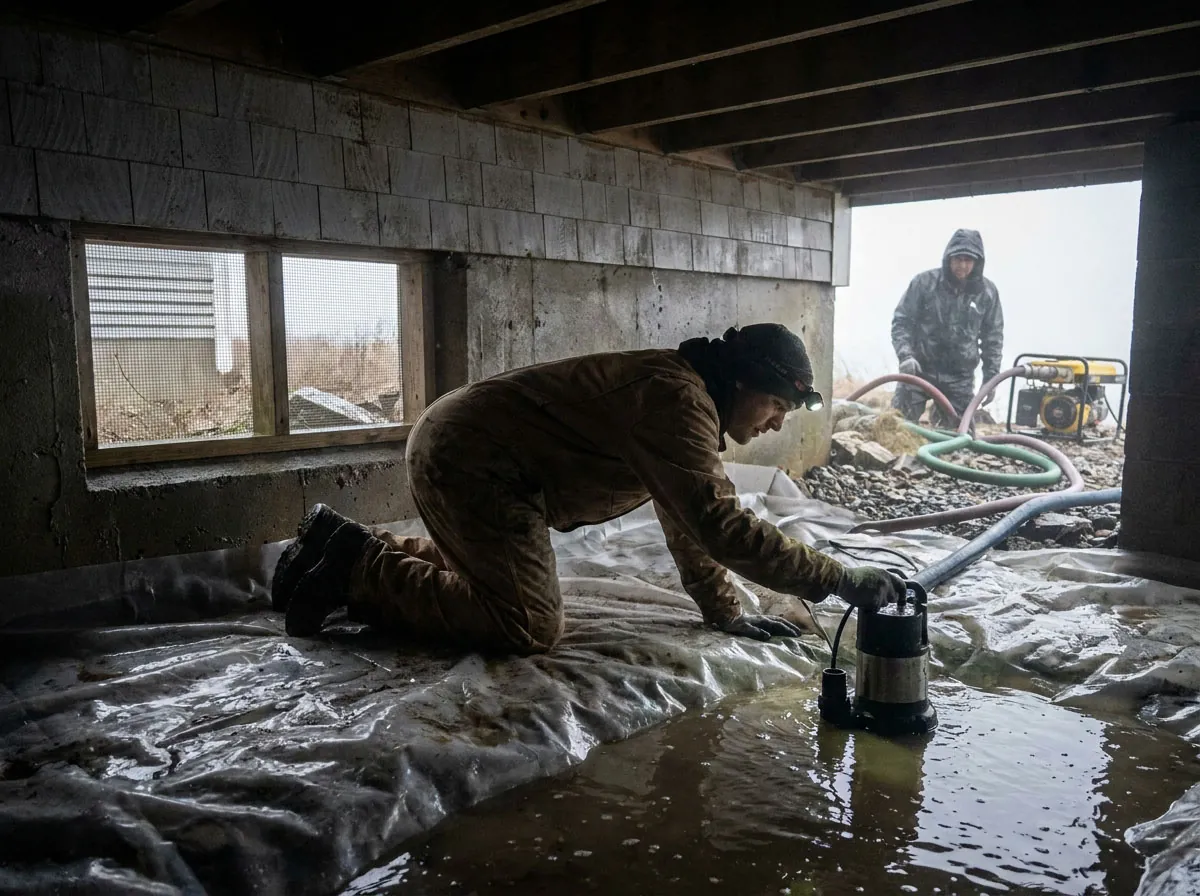
Avoid Bundling Cleanup with a Permanent System
An immediate water-loss scope is different from encapsulation, drainage work, a permanent pump or ongoing humidity control. Ask which problem each proposed item addresses and whether a separate trade must investigate the source. A new ground cover does not by itself document dry framing or resolve a continuing leak.
Ask About the Rooms Above
If the subfloor or building services are affected, the plan may need to consider flooring and occupied rooms above the crawl space. Ask how readings below connect to the upstairs assessment. Keep the final material records before insulation or ground cover conceals areas that were previously visible.
Keep Separate Work Visible
The worksheet cannot identify unsafe air, damaged wiring, pests or concealed structural deterioration.
Budget by the Actual Work.
The combined cleanup-and-drying allowance and finish-material rates answer different questions. Minimum charges, source repairs, access, disposal and specialist work require a written provider scope.
| Scope | Planning range | What to confirm |
|---|---|---|
| Water extraction + drying | $4–$12 / affected sq ft | Combined allowance. Do not add another drying charge. |
| Carpet replacement | $2–$8 / sq ft | Labor + material benchmark; verify removal, disposal and extras. |
| Hardwood replacement | $7–$25 / sq ft | Replacement, not refinishing; subfloor priced separately. |
| Drywall installation | $1.50–$3.50 / surface sq ft | Labor + material allowance; confirm demolition, finish and paint. |
| Plaster work | $2–$10 / surface sq ft | Repair scope varies; identify the existing wall construction. |
Source: HomeGuide water-damage cost guide. These are national reference ranges, not Georgia contractor quotes. Taxes, permits, source repair, specialist work and hidden damage are not assumed included. No local price multiplier is applied.
Questions, Answered
Does crawl-space cleanup include encapsulation?
Not necessarily. Water removal and drying address the current incident. Encapsulation, new drains and permanent moisture-control systems are separate work that should be assessed and priced independently.
Should I enter the crawl space to measure the damage?
No. Use known plans or dimensions and describe what is visible from safety. A wet crawl space may contain hazards that this site and its calculators cannot assess.
Does ground-cover replacement mean the framing is dry?
No. Ground cover and wood framing are different parts of the building. Ask for appropriate material readings and the provider’s completion criteria before concealing affected areas.
Who performs crawl-space water removal after a referral?
An independent provider, if one accepts the job. Water Damage Georgia supplies planning resources and a referral line; it does not perform, supervise or guarantee restoration.
What should I have ready for a crawl-space water removal call?
Have the property ZIP, the observed source, affected rooms and known access or safety concerns ready. State what is unknown. Ask about provider identity, scope, fees and availability before authorizing an appointment.
Talk Through Your Next Step
Have your ZIP, water source and affected rooms ready. Ask about service availability, the provider’s identity and any charges.
Independent referrals; providers set availability, scope and fees.
Published by Bob Carlton · Water Damage Georgia · Content reviewed September 2026. Educational information; no professional certification or insurer review is claimed.